Friday, 27 September 2019

Riding through Puducherry

On the second day, we rented a 2 wheeler for a shockingly inexpensive amount of 250/24 hrs. That morning we drove to Auroville.
Watched the videos on how Auroville started after "Mother" who was a staunch follower of Aurobindo's ideals and how Matrimandir was built over those years.
The idea and philosophy really caught me. I liked the idea of the dream:
"There should be somewhere on earth a place which no nation could claim as its own, where all human beings of goodwill who have a sincere aspiration could live freely as citizens of the world and obey one single authority, that of the supreme Truth; a place of peace, concord and harmony where all the fighting instincts of man would be used exclusively to conquer the causes of his sufferings and miseries, to surmount his weaknesses and ignorance, to triumph over his limitations and incapacities; a place where the needs of the spirit and the concern for progress would take precedence over the satisfaction of desires and passions, the search for pleasure and material enjoyment..." and so even bought a poster of this and is now on our wall.

Their idea of life long learning, and teaching, progressing is commendable.
Walk to Matrimandir was fun. Having small stops to sit and chill, clicking pictures and pouring water on top of my head and inside my t-shirt to cool myself is how I spent the time.

That evening, we rode to Chinnaveerapatnam beach. A less explored beach where we could play heartfully in the water and had nice sea food from an amma who let us make this video as well.


Upon playing this again, I can smell it and mouth starts watering.
That evening ended with a nice ride back to guest house. At around 7:25 pm we attended a meditation session at Aurobindo Ashram. It was as quiet as it's ever been. People sat in dark in whatever posture and wherever they wished. No instructions and no rules. Silence was the only rule. For 45 min, I sat there. First concentrating on external sounds, thoughts, someone walking, then tried concentrating on my breath. As hard as it was I went back to my idea that meditation might mean different to different people. We can choose what it means to us. I often take the easy route and imagine myself being outside of me. And then look at the thoughts that way. This time helped me reflect on certain problems and decisions I was struggling with. Was quite an experience. During the whole session, I was afraid that Akshay would have been in deep meditation and was thinking of how to disturb him. Looked like he was indeed in deep sleep :P

That night we walked and sat along the beach because, well, it's one of the only things you do in Pondi.

Next day we visited some more places, Aurodhan art gallery where photography was on display, Aurobindo hand made paper factory where we could see the various steps with fascinated eyes. https://www.pondylive.com/ is a website that gives info of the events, shows, galleries happening in Pondi at the time.


We had an expensive lunch at a French Restaurant, Crepe in Touch.


That night we gave back the two wheeler and took the early morning bus to Thiruvannamalai for our next destination.


Sea and sea food

Reached in time for the sun rise in the east coast in Pondicherry on Sunday morning. Hungry and dehydrated after a 2 km walk from where the bus stopped. Thanks to Varsha who had mentioned about Aurobindo Ashram guest house which provided accommodation for a reasonable cost. Though there is restriction of being back in the house before 10:30 pm, we found it suitable for our plan. It's funny that when I looked up her blog to link it above, I saw that she is off to Sikkim at the moment.

Pondicherry was hot and humid, and me being a person who turns off the fan each time someone turns it on in Bangalore, had the fan running in high speed and yet feeling the heat.
That morning, we had yummy omlette and dosas at a local vandi which later became our breakfast friend for the next 3 days.

Once we settled in the room, got some good sleep that I had lost in the sleeper bus while treating a patient in my dream the previous night.

Akshay's brother, Ajay joined us from Chennai that noon though he had an exam on economics to write a day later.
We had got a suggestion from Aji and Riya to eat at fishaurant and we did the exact thing. I think to get the feel and sense of a place we need to savour the local food. And what's sea without sea food?! For those who know me, I have a complicated relationship with non-veg food. I love chicken but I choose to eat it very rarely. (only when it's going waste after a friend orders it :P or when I'm traveling and want to experience everything possible) This is not because I'm born to be a vegetarian but because once I saw a bunch of hens waiting to get butchered and ever since feel sorry for them. But sea food? Hmm..they are plenty in number, small in size don't really make me feel sorry. At fishaurant we ate everything. Prawns, fish, squid, crabs. All three of us were eating crab for the first time. You can imagine the amount of confusion and embarrassment we were in. At first Akshay ate up the entire crab leg from his soup with all the hard parts while I was telling them that some parts are meant to be removed. We took the help of the waiter and the chef to understand how to eat the crabs. We crack them in the mouth and eat the parts that we can and spit the hard and intuitively non-edible parts. Simple. Serving these creatures as whole enables mindful eating I guess. Anyway, that was a seaful meal ending with elaneer payasam with tender coconut chunks it it!


We had bought a Pondicherry tourist book with a map attached at the end from a shop near Fishaurant to help us decide the places we wanted to go and Akshay took charge of the navigation using the map like a sailor.


We first visited Mahakavi Bharathiyar Memorial Centre, a poet and social activist I hadn't heard of before but who wrote very progressive poems, articles in papers, about almost every social and political issue. About how women need to be thought of as equals, how one must not marry young, about how caste was ruling and making it practically anarchy, etc etc. Very inspiring. We weren't allowed to click pictures of these writings. We then then went to Bharathidasan museum preserving the work of another such poet with progressive vision who was inspired by Bharathiyar. Their houses were within 500 mts but they lived in those houses at different times :)
One of his poems talking about equality of gender he wrote,
"the cradle will swing, no matter who rocks it" made me really smile.

From there we walked eating ice cream on the long stretch of Goubert Avenue and street. The main street along the beach. We sat for a long time on the rocks along the beach. There is something mesmerising about the sea. It connects people, collects stories, brings out thoughts, reflections, decisions, smiles and serenity. One can spend a lot of time with it and still feel it inadequate. I was thinking about how the tsunami waves might have looked and what feeling it would have brought to the people witnessing it. *Chills*


Ajay left that evening back to IIT, Chennai and we ended up eating all the street food that our tummies could take. One vandi is worth mentioning because of how attractive they had made their business. They had stuff being grilled - chicken, prawn, paneer, potatoes and a bike standing to display their menu on a board which was wonderfully lit with tiny lights, and many dogs to feed the left overs. They had battery backup, freezer to store a lot of meat and a crowd to finish that up.

Much needed break...or Inspiration!

I just returned from a 6 day long trip. It's been 13 months since I moved to Bangalore now and thought it's a good time to take a few days off, with not necessarily any purpose, but to just travel, relax, think, reflect, and get refreshed.
Traveled with Akshay and we decided on two places to spend time, Pondicherry and Sittilingi Valley, in Tamil Nadu. I shall mention to those wondering about the weird combination. I don't know when my fascination or perhaps obsession with Pondicherry started (probably when I heard stories from multiple people about the beach, the architecture, Auroville). What I remember is when I'm frustrated with the monotony of daily life I often told myself and to friends that I'd be going to Pondi the next day, while I never did. Hence this time, I was like why not really go?

Regarding choosing to go to Sittilingi Valley, remember I'd written about meeting Dr Swetha in the CMC Vellore MMed entrance exam who would be later going to work at Tribal Health Initiative at Sittilingi? I have kept in touch with her and thought of visiting her, and the place to learn from what they are doing and interact with the founders of THI. Also since it's a beautiful valley for the eyes and mind, it had to be in the our plan. This combination also made sure a mixture of conventional tourist place and an offbeat place which is exactly what I wanted!

With the plan of these 2 places and the onward ticket for a sleeper bus from Bangalore to Pondi, off we went on 21st night without thinking much about the accommodation or the specific itinerary. Gave me a feeling of being a adventurous traveler :P
It was surprising to meet a old friend from MMC in the same bus who was traveling to Pondi. Got us some time to catch up with each other. 


Well, there's a lot to write about each of these places and thus I'd make them as followup posts.

Tuesday, 10 September 2019

Why I choose Health Equity Research?

Last day I applied to attend a workshop on cutting edge research on health inequalities: Concepts & methods at Bangalore.
One of the questions was- Please share a brief (up to 750 words) describing the reasons for your interest in health inequities research and what you expect to learn from the workshop. So with much interest the wrote down the following response. (Later realised the actual limit is 795 characters and had to completely cut down :P)
But it was a happy mistake since I found this a reflective exercise, of how I've evolved and the directions I'm currently taking and hence am sharing it here.

Please note the last date for submission of application to attend this is 15th of September and the workshop is on 25 – 29 November 2019. Do apply!

My response written:

"I’m a Primary Health Care Clinician and Researcher who believes in Health Equity and quality health care for all and I have the ability and the passion to learn anything that facilitates me to take steps towards this purpose.

From my Undergraduate training level, I’ve been appalled by the fact that the quality of and access to health care is very different for different communities and is not granted, though I believe health care needs to be a basic human right. I started following lectures online through coursera on global health and research methods. One of the main resources that helped me gain a better perspective on health inequities research is through the Webinars “Equilogues” conducted in 2017. That is when I was exposed to interesting qualitative research methods and its importance in health research. This encouraged me to do a qualitative research for my thesis in my fellowship. Since then, I’ve always leaned towards research that comprises of health systems, with mixed methods.

During my fellowship at SVYM, I learnt that one can be a practicing doctor but also be active in public health if the right attitude and lens is used. This is also the place where I appreciated the role of community engagement and participation.

I believe that quality and responsive primary health care can actually contribute to a large extent in dealing with the problem of health inequity. Currently a huge gap exists between what the health needs and expectations are of various communities and what the health care system is able to deliver. The gaps are not just at the service delivery level, but at understanding of different communities, capacity level, trust in the health care system, empathy, holistic care approach, multidisciplinary approach, person centredness care etc. This is complicated by various societal hierarchies, social stigma, and economic disadvantages.

With the above background, currently I have started working with the Women in Sex work and Transgender communities in Bangalore to understand their health needs and how best a Navigational support system can help in improving the access to primary care for these communities. This is a proposal which me and my colleagues submitted to Grand Challenges Canada Bold ideas Big impact in September 2018. This includes building an app, a community leadership and a network of primary care providers who are responsive to the needs of these communities. We are currently developing the study and yet to roll out the study.I have attended a few workshops at the Institute of Public Health and have been more and more interested in participatory research and methods.

I, being a member of AFPI (Academy of Family Physicians of India), with my other colleagues are also building a Primary health care movement with doctors with the attitude of Primary Health Care as a holistic concept to reach out to the public through videos, newsletters to bridge this communication gap between healthcare professionals and society in general.Over the next few years, I also intend to pursue a PhD in public health which would be related to health equity research.

I will benefit immensely from this workshop on cutting edge research on health inequalities: Concepts & methods for the above mentioned project and work.
Through the workshop I intend to
  • Strengthen my knowledge in various methods including frameworks in health inequities research.
  • Understand how to wear the lens of health inequities in every stage of research from framing question to drawing inferences.
  • Simultaneously try to understand at a deeper level through discussions, the various methods applicable to my current project and work.
  • Connect with a diverse group of people from the various universities working towards health equity and learn from them.
  • Get a bigger view of the landscape of Health inequities research in India and globally which would help me shape and get ideas for my PhD program.
 Hence I very much look forward to this workshop."

Monday, 13 May 2019

About the entrance to MMed Family Medicine in CMC, Vellore

Last Friday I took an entrance exam. This is for MMed Family Medicine offered as a distance learning course from CMC Vellore. It was an enjoyable experience in the sense that it needed no last minute preparation unlike UG internals and final exams, though I did solve up questions about a few common diseases in general practice like Diabetes, Hypertension so on from a wonderful book: Swanson's Family Medicine Review, A problem oriented approach, (thanks to RK) a book well named because the questions are very real life practice situations and written like short stories making you want to keep reading the next question.

So the questions in the entrance exam were framed such that it tested our knowledge and practice skills developed over time and not overnight. That's something appreciable as well as challenging. Of course there were a few annoying questions like "What is the normal amount of menstrual blood in each cycle?" with options being 80 ml, 90 ml, 100 ml, 120 ml which I probably got wrong. But most others were like patients in your clinical practice like a lady with 6 months of increased frequency of urination, urgency and pus cells in urine but with sterile culture each time- (options being RCC, Renal TB etc). The exact patient I'm struggling with currently without a diagnosis. All kinds of problems, Psychiatry, Medicine, Pediatrics, OBG, Ophthalmology, ENT, Surgery were covered. Most common causes of a few symptoms like vertigo, sensorineural deafness in children, organism in COPD exacerbation, fever in a child presenting in Vellore were asked (?Scrub typhus).
There was no negative marking and so I could answer all questions with less fear.

By the time I reached the question number 75/80, I realised the total number of questions were 120 and not 100 like I thought. But I had enough time with total time of the test being 90 minutes. There were a few students reading Environmental Science before entering the exam confusing me but I soon realised there was entrance for UG in CMC Vellore that was simultaneously conducted which was for 3 hrs.

In the queue before entering the hall, I met this interesting girl who recently graduated from MBBS who now has probably reached Sittilingi Valley, Tamil Nadu- Tribal Health Initiative 
with passion to work there for the community. I got to catch hold of her after the test too and we took the same auto to metro and the metro as well. It was lovely to interact with someone who reminded me again that such wonderful doctors are all around scattered. We need to really have a network of such doctors who really are passionate about being a person who make a difference in people's lives and not get started with the next degree just for the sake of it. This network is forming and will certainly be something I'd work on actively.
We bought some books outside the MG road metro for low price (The Power of Habit for me and The Alchemist for her).
I'll probably visit her at Sittilingi.

I hope this post will be helpful to those who plan to write the entrance for MMed in Family medicine in future. I failed to get any details on the exam online before mine but luckily one of my friends' classmate who is finishing PGDFM had some advice and was able to give me the details similar to the above.

It'd be nice if I get through the admission. But I realised today that PGDFM course application opens in June which doesn't need entrance exam. The curriculum is almost the same as MMed but the degree might not be through the University (that seems to be the difference). So I might as well apply to that if this doesn't work. So that is something you might want to consider if you have considered MMed.

Monday, 12 November 2018

Patient Centred Medical Home- Lessons learnt in becoming someone's primary doctor

I am planning to make this a series of posts. Posts documenting my journey in building practice, in becoming the primary doctor for a set of people. All the discussions, experiences, and skills learnt will be put in a useful manner as far as possible.

Recently,  I saw a patient ABC who was diagnosed with HIV few months ago elsewhere and was started on treatment. But had come for a second opinion about his illness. I could see that he felt lost and had many doubts. He was sitting quite far from me, across the table with his relative being closer than him. I was finding it hard to ask him questions and I could see that the same feelings were reciprocated in him as I got very superficial answers. In order to gain trust of the two, I continued to have a detailed conversation and history taking, did examination in front of the relative, smartly made him sit in a chair closer to me and then requested the relative to give me some time to talk to the patient alone. The relative agreed and sat out. That's when I could ask him about his real concerns. That's when I felt real connection. And I think the same was reciprocated by him as he then mentioned that he still couldn't accept the diagnosis, had doubts about it. No doctor had actually talked to him about it after diagnosis, life had changed. RK, my mentor had introduced himself and left, giving me time to come till this point, when he pitched in. When I stated the patient's concerns to the patient and then was trying to figure out how to address those, I was a bit confused. That's when RK suggested to the patient that we'd set an agenda for the visit and told him genuinely that we will walk through this step by step and that we'd be there with him etc which reassured him. I told him that I'd want him to be okay with the diagnosis and that he'd be healthy. He looked better. Then we did some tests etc..etc.

After he left, RK suggested an exercise where he'd written down some important etiquette that would help in building rapport, that makes a patient comfortable, respected and the whole process of consultation more efficient. I had to rate myself 1-10 on those points, he rated me too and Praneeth and our psychologist Aji nicely discussed what techniques they use out of their experience for each of these points.

As an intern in a government hospital, I had learnt to help the patients get through the system. To fill in the gaps. Like, teaching them how to take their prescribed medicines, how and where to get the investigations done. Talking to them about what their diagnosis was and what was being done for it and what they had to ensure. 

As a fellow in HIV at SVYM, I learnt that care can be 100 X better with the right attitude people around. How to give holistic care. Since I was seeing OPD patients on not a regular schedule, it was only rare to see the same patients in the opd in a planned manner. So every patient I saw, I'd make sure I gave them all the information, and advice they need. I never was a primary doctor to anyone except a few of them who valued my care and stuck to me over the phone. But it was never a plan. I never asked anyone to come back and see me next Monday or so. (Not that this experience was bad, but not enough for learning how to be someone's doctor)
But now, I have the time and space to build relationship with my patients. To ask them to follow up. To go slow and not bombard them with information.

This is the first and major behaviour I've to embrace. Starting to think of every patient as my own and plan accordingly.
Praneeth, my colleague has built his practice beautifully. He was telling for each of the above points on paper how he manages to do it. 
He told us how he remembers some important details about the life of his patients. Not just their symptoms, but who they are, what they like, what they're going through etc etc. He used to make notes before. Now its natural to him. It made me remember a poem I wrote once.

So out of all the discussions, I've mentioned a few here-
1. In order to build rapport, we often call the patient by their name. What happens if their name is difficult? Ask - "What shall I call you as?" or be honest and say, "I'm having difficulty in pronouncing your name, what do you prefer? Help me with it" etc. It shows respect.

2. Keep a sheet to scribble important things you want to remember.

3. After sending out the relative, I had to explain to the patient why I did so. Something like "sometimes for some reasons, we can't be completely comfortable with mentioning everything to our relatives. So I sent him out. What you share now, will remain within this room."

4. Asking the patient "how much time do you have". This will not only give them a sense that we value their time but also help us plan our agenda.

5. "What is your main concern?" always works.  

6. I have this problem of documenting simultaneously while talking. But a smart way would be after the intense sharing that the patient does, we can write with involvement of the patient. Something like "Ah, so these are your main concerns...blah blah..(writing and showing the patient), am I right?" or
"So this is our plan..blah blah..(writing and showing), is that okay?"

7. Always ask them to follow up!


Tuesday, 23 October 2018

Evidence Based Practice

Yesterday, I was told to savour each day's learning rather than just eating a lot. I liked that idea. Because learning takes a different shape when given enough time to reflect on, and form consolidated applicable information. 

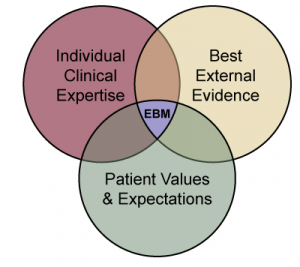
I applied the 3 pillars of evidence based practice to the couple who had been referred for adult vaccination by Dr Rao. Not that I had never applied, but I never had the time to actually reflect on what were the arguments in each pillar I was applying. The pillars being-

Related image


The wife was 62 yrs and husband 69 yrs. They had their wonderful family physician Dr Rao who had referred for vaccination to us. They actually expressed while taking history how they approached him for every health issue and felt safe. That reminded me of my grandfather who also was practicing family medicine doing home visits with his suit case. Those days I thought he was old fashioned but now when I don't have a family physician myself, I'm starting to requestion myself.

Since they were elderly, and the husband had chronic lung condition, I wanted to offer them pneumococcal and Influenza vaccine. As I knew they were coming, I got some time to look up on the guidelines and literature. So my dilemma was-

After 65 yrs, one is given PCV13 followed by PPSV 23 after a year to enhance the seroconversion and protection levels for the common strains. But for those adults less than 65 yrs just one shot of PPSV23 is recommended. Eventually when they turned 65 and beyond, they have to be given PCV13 as well. And a few studies showed that giving PCV 13 followed by PPSV23 was better rather than the other way round. So I was confused whether to give the wife just PPSV23 or start with PCV13.

That's when RK asked me to apply the 3 pillars. According to my clinical judgement, it made sense to start with PCV13 as she was close to age 65. I explained the same to her and she was happy to go with that logic. Thus the completion of the 3 pillars.
I'm yet to read up on the efficacy and other aspects of the adult vaccines and the same will follow in my next post.